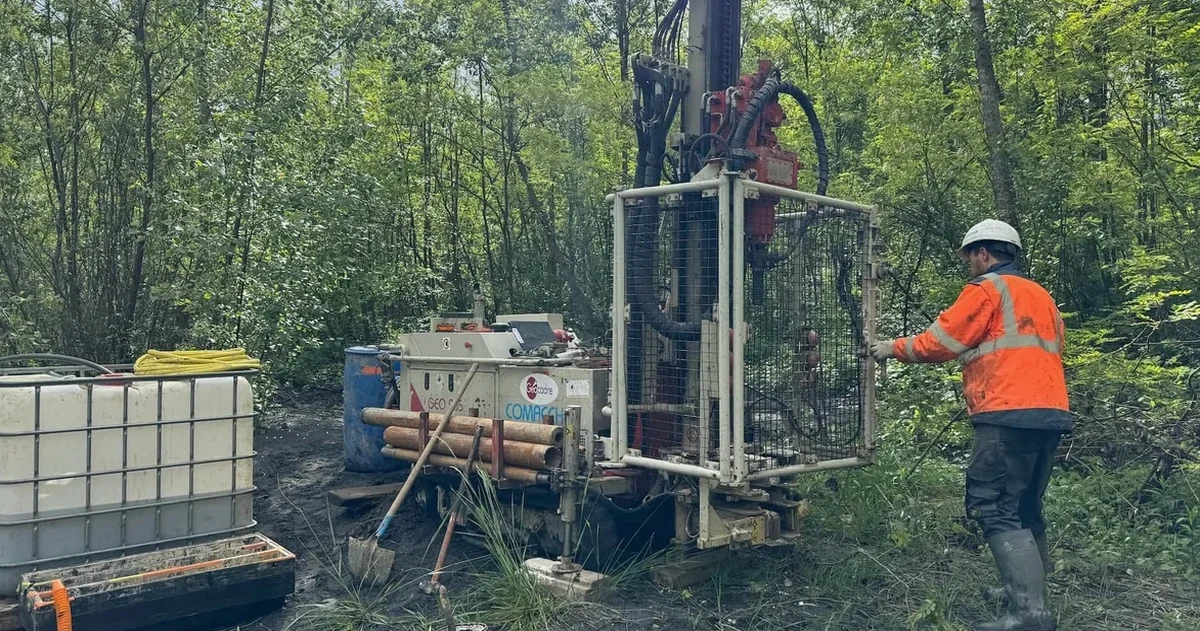
The Illinois River bluffs and the deep glacial outwash deposits beneath Peoria create a subsurface environment that demands more than a basic look at the ground. Builders working along the riverfront, near the Warehouse District, or expanding into the loess-mantled uplands east of Route 29 encounter layered silts, soft clays, and occasional sand lenses that shift behavior with seasonal moisture. A soil mechanics study in Peoria Illinois addresses these conditions by measuring shear strength, compressibility, and permeability under controlled laboratory and field protocols, giving structural engineers the parameters needed for foundation design that holds through freeze-thaw cycles and flood-stage saturation.
When the site sits on fill from the old industrial corridor or on the colluvial slopes approaching Grandview Drive, we often recommend pairing the lab program with in-situ SPT drilling to capture blow counts and sample recovery data that correlate directly with bearing capacity calculations.
In Peoria, the difference between a stiff crust and a soft layer underneath is often less than two feet — and that transition controls the entire foundation performance.
Our approach and scope
Peoria’s expansion from a 19th-century distilling and heavy manufacturing center into a modern logistics and medical hub left behind a patchwork of engineered fills, buried foundations, and rerouted drainage that older borings rarely map in detail. A soil mechanics study here has to account for that legacy: we routinely pull samples from depths where historical fill transitions into natural lacustrine sediment, then run classification tests per ASTM D2487 and strength tests that reflect the stress history of each layer.
In projects near the McClugage Bridge or along the reconstructed Adams Street corridor, integrating lab data with CPT testing yields continuous stratigraphic profiles that reveal thin drainage lenses invisible to split spoon sampling, reducing the chance of differential settlement surprises during construction.
Quick answers
How long does a soil mechanics study take for a typical commercial lot in Peoria?
Field drilling and sampling for a standard commercial parcel typically wraps up in one to two days. Laboratory testing — especially consolidation and triaxial work — runs two to three weeks from sample delivery because of the time needed for staged loading and pore pressure equalization. We schedule the lab window to align with your civil engineer’s submission timeline for the City of Peoria building permit package.
What does a soil mechanics study cost for a project in the Peoria area?
For a mid-size commercial or light industrial site in Peoria, the combined field investigation and laboratory testing program usually falls between US$3,450 and US$5,280. The range depends on the number of borings, the depth required to reach competent bearing strata, and the specific lab tests the structural engineer specifies — consolidation and triaxial tests add to the schedule and cost compared to a classification-only package.
Does the City of Peoria require a soil mechanics report for building permits?
Yes. The City of Peoria’s Community Development Department requires a geotechnical report prepared under the supervision of a licensed professional engineer as part of the building permit application for commercial and multi-family structures. The report must demonstrate compliance with IBC Chapter 18, including bearing capacity, settlement analysis, and, for sites in higher seismic design categories, liquefaction assessment. Our lab data package is formatted to integrate directly into that report.
Can you test the fill material on my Peoria site to see if it is suitable for reuse?
In many cases, yes. We run classification, Proctor compaction (ASTM D698), and often a pH and sulfate suite on the fill material to assess its suitability as structural fill or general backfill. For sites in the older industrial parts of Peoria — where fill can contain brick fragments, cinders, or hydrocarbon-stained soil — we also coordinate chemical analysis through partner labs to rule out environmental constraints before reusing material on site.