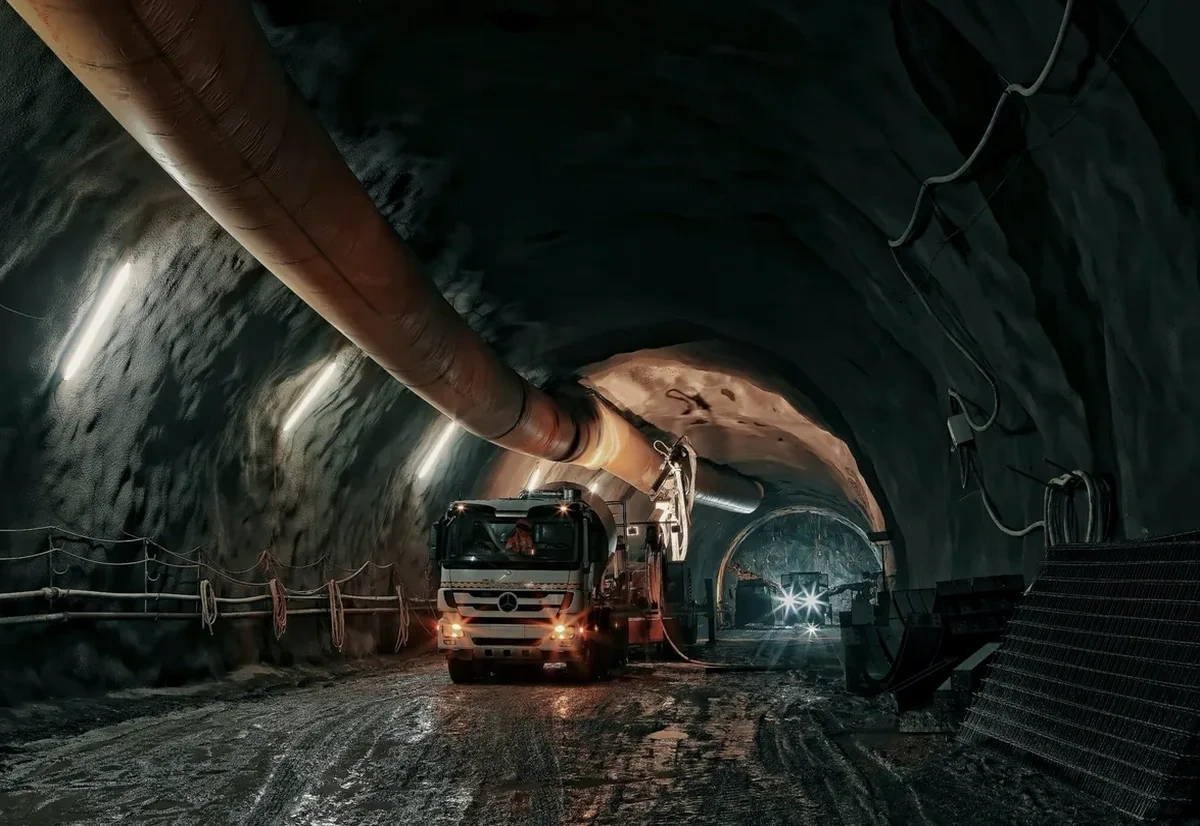
Cross the river from downtown Peoria to East Peoria and the ground changes fast. The west side near the Heights sits on stiffer glacial till, but down by the Illinois River and into the East Peoria bottomlands you hit those deep alluvial clays and interbedded silts. That soft stuff is what drives tunnel design here. Our lab has run consolidation and triaxial tests on samples pulled from those lowland deposits, and the behavior is consistent with high plasticity lean clays that creep under sustained load. Getting the classification and strength profile right before you even think about a TBM or open-face shield is non-negotiable. We see a lot of projects where the upfront characterization was just too thin for the variability across the valley.
Peoria’s alluvial clays near the river can show liquidity indices above 0.8 — textbook squeezing ground conditions that demand lab-calibrated support pressure design.
Our approach and scope
IBC Chapter 18 and ASCE 7 set the baseline, but in Peoria the real action is in the ASTM D2487 classification and D2435 consolidation parameters. The local geology is a mix of Peoria Silt over Glasford Formation till, capped in the valley by recent alluvial deposits up to 80 feet thick in some borings. For soft ground tunneling, we focus on undrained shear strength via unconsolidated-undrained triaxial and pore pressure dissipation curves from incremental consolidation. These values feed directly into face stability assessments and settlement trough predictions. The alluvial clays here typically classify as CL to CH, with liquidity indices sometimes above 0.8 near the river margins. That means squeezing ground potential, and it means your support pressure calculations better reflect real lab data, not textbook ranges.
Quick answers
What does a soft soil tunnel analysis cost in Peoria?
A full geotechnical analysis package for soft soil tunnels in the Peoria area typically runs between US$4,280 and US$19,210. The range depends on the number of borings sampled, the depth of the alluvial sequence, and whether we're running standard consolidation and UU triaxial or adding CU triaxial with pore pressure measurement for more complex face stability modeling.
Which lab tests are essential for tunneling through Peoria’s river valley clays?
At minimum, we recommend incremental consolidation, UU triaxial for undrained shear strength, and full Atterberg limits with natural moisture content on every major stratigraphic unit. The moisture content relative to the plastic limit is what flags the real squeezing ground risk. If the liquidity index is pushing above 0.8, we usually add sensitivity testing and recommend a more conservative support pressure envelope.
How do you handle the transition from glacial till to alluvial clay in the tunnel alignment?
We sample both sides of the contact aggressively. Usually that means continuous Shelby tubes through the transition zone with closer spacing than the standard 5-foot interval. In the lab we run consolidation and strength tests on specimens from each tube to map the change in stiffness and strength over very short distances. That data lets the designer specify face pressure adjustment protocols for the TBM operator.