← Home · Investigation

Exploratory Test Pit Services in Peoria, Illinois

Together, we solve the challenges of tomorrow.

LEARN MORE →

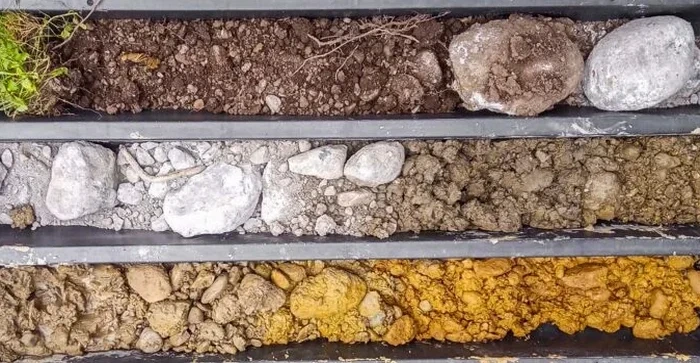
We see it too often around Peoria. A crew trenches for a footing and hits old fill nobody knew was there. The project stops. The budget stretches. An exploratory test pit would have caught it early. Peoria sits on the Illinois River bluffs, and the subsurface here mixes natural loess with decades of urban fill. That combination fools shallow borings. A test pit lets you walk the profile with your own eyes. We log strata, photograph the face, and sample directly from the bench. For sites near the river or in older neighborhoods like the North Valley, pairing a test pit with grain-size analysis helps us flag silt pockets that hold water and weaken bearing. No guesswork. Just exposed ground and a clear log.

Nothing replaces standing at the bottom of a pit and seeing the actual soil layering. It turns assumptions into facts before concrete is poured.

Our approach and scope

In this part of Illinois, the loess can look uniform from the surface but hide thin clay seams that cause differential settlement. Our field crew opens the pit with a track excavator, usually to 8 or 10 feet, and we clean the face by hand so the layering is sharp. We measure moisture, density, and stratigraphy on site. If the pit walls stand well, we may run a plate-load-test right on the pit floor to get a direct bearing reading without waiting for lab samples. When we find fill with brick, cinders, or organic streaks, we extend the pit deeper or recommend test-pits at multiple pads to map the debris boundary. Every pit gets a log with photos and a cross-section sketch tied to site benchmarks. We follow IBC Chapter 18 and classify soils per ASTM D2487. The report moves fast because Peoria contractors need answers before the weather turns.
Exploratory Test Pit Services in Peoria, Illinois
Technical reference image — Peoria Illinois

Local geotechnical context

Peoria winters hit the ground hard. Freeze-thaw cycles can turn a stable pit wall into a slough hazard in 48 hours. That is why we schedule test pits in dry windows and never leave one open overnight without shoring or a safety barricade. Spring brings its own problem: the water table rises fast in the river valley, and a pit that was dry at noon can have a foot of water by evening. We pump and log the inflow rate. The real risk is misreading old fill as native soil. Peoria had brick yards, rail yards, and foundries that left slag and ash in the ground. If you treat that layer as bearing stratum, you get settlement later. Our log flags every inch of suspect material. For structures with basement levels, we often combine test pits with deep-excavations monitoring to track wall stability during construction.

Need a geotechnical assessment?

Reply within 24h.

Email: contact@geotechnicalengineering1.org

Technical parameters

ParameterTypical value
Typical pit depth in Peoria bluffs6 to 10 ft, deeper if fill persists
Excavation methodTrack excavator with smooth bucket, hand-trimmed face
Soil classification standardASTM D2487 (Unified Soil Classification System)
Field tests performed in-pitPocket penetrometer, torvane, sand cone density
Sampling methodBulk bags from each stratum, Shelby tubes in cohesive layers
Groundwater observationSeepage rate noted if encountered, depth to water recorded
Backfill and compactionLift-compacted with on-site material or lean clay per spec

Related services

01

Exploratory Pit Logging and Sampling

We open, clean, and log each pit with high-resolution photos and a stratigraphic column. Bulk samples and Shelby tubes are taken at the depths the structural engineer needs. Logs include USCS classification, moisture, consistency, and any fill indicators.

02

In-Pit Plate Load and Density Testing

Before backfilling, we can run a plate load test directly on the pit floor to measure bearing capacity and modulus of subgrade reaction. Sand cone density tests give us in-place compaction numbers for fill or native ground.

Relevant standards

ASTM D2487 — Standard Practice for Classification of Soils for Engineering Purposes (Unified Soil Classification System), IBC Chapter 18 — Soils and Foundations, ASCE 7-22 — Minimum Design Loads and Associated Criteria for Buildings and Other Structures, OSHA 29 CFR 1926 Subpart P — Excavations (safety and protective systems)

Quick answers

How much does an exploratory test pit cost in Peoria?

For a single pit with log, photos, and basic field testing, we typically see US$480 to US$830 depending on depth, access, and whether we need to bring in a pump for groundwater. Multiple pits on the same site reduce the per-unit cost because the excavator is already on site.

How deep do you dig test pits in Peoria?

Most pits go 6 to 10 feet deep. That covers typical footing elevations. If we hit fill or soft ground, we go deeper until we reach competent native material. The excavator reach and pit safety rules set the practical maximum around 12 to 14 feet.

What do you look for when logging a test pit?

We look for layering changes, fill versus native soil, moisture, seepage, root zones, and any debris like brick, cinders, or slag. Each layer gets a USCS classification, a consistency or density description, and a field strength test with a pocket penetrometer or torvane.
Location and service area

We serve projects in Peoria Illinois and surrounding areas.

View larger map