← Home · Foundations

Shallow Foundation Design in Peoria, Illinois

Together, we solve the challenges of tomorrow.

LEARN MORE →

The Illinois River Valley cuts straight through Peoria, leaving behind a stratigraphic legacy of loess-capped bluffs and deep alluvial deposits that shape every square foot of development here. Anyone who has excavated a site east of University Street toward the river bluffs knows the windblown silt runs thick, sometimes twenty feet or more, before you hit the glacial till. That loess stands stable on a vertical cut until it gets wet, and then it collapses fast. Designing a shallow foundation in Peoria means reconciling the bearing capacity of these silts with the settlement tolerances of the structure above. We routinely pair borings with CPT testing to map the transition from loess into the underlying till or sand, because the stiffness contrast can be steep and a footing that sits half on loess and half on weathered shale is asking for differential movement. For projects closer to the river, where the water table sits high and the deposits are recent, we often look at stone columns as a ground improvement strategy before committing to a spread footing scheme.

In Peoria, loess collapse is the silent failure mode. A footing that looks fine in dry weather can settle inches after a single wet season if the profile is not properly characterized.

Our approach and scope

Peoria falls under IBC Chapter 18 and ASCE 7-22, which means every shallow foundation design in the city has to address seismic demands and frost depth simultaneously. The prescribed frost depth for central Illinois is 36 inches, but that number assumes you are working in mineral soil, not in the organic silts that show up in the old river channels that thread through the south side. In our experience, the real governing criterion in Peoria is seldom bearing failure, it is total settlement and, more critically, differential settlement under sustained loading. We run one-dimensional consolidation and elastic settlement analyses calibrated against triaxial strength testing, because the loess can exhibit collapse potential upon wetting that is easy to miss in a standard SPT-based correlation. The Illinois State Geological Survey maps show the Wedron Formation till underlying much of the metro, and when that till is dense and overconsolidated, it makes a reliable bearing stratum. The challenge is determining whether the footing can reach it without overexcavation or whether a stiffened mat foundation becomes more economical.
Shallow Foundation Design in Peoria, Illinois
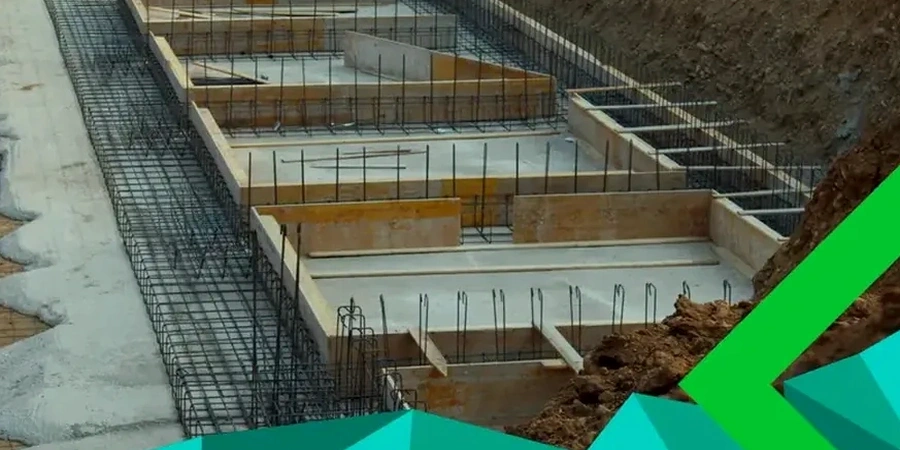
Technical reference image — Peoria Illinois

Local geotechnical context

A mistake we see repeatedly in the Peoria market is the assumption that a footing load test on dry loess proves the formation is good for the life of the structure. The loess under Peoria's east bluff neighborhoods can stand unsupported for years, but if a water line breaks or site grading channels runoff toward the footing, the collapse happens in hours. We have investigated distressed buildings near Bradley Park where the culprit was not poor compaction but post-construction wetting of a loess subgrade that had never been identified as collapsible. Another common error is placing footings on the fill that blankets the old river terraces south of downtown without verifying fill thickness and composition. That fill can be anything from clean sand to brick rubble to fly ash, and its bearing response under cyclic moisture changes is unpredictable. A shallow foundation design in Peoria that neglects the collapse potential and the fill variability is taking a gamble that Illinois weather will stay dry, and anyone who has lived through a Peoria spring knows that is not a bet worth making.

Need a geotechnical assessment?

Reply within 24h.

Email: contact@geotechnicalengineering1.org

Technical parameters

ParameterTypical value
Frost depth (IBC)36 in
Typical loess thickness (bluffs)15–40 ft
Bearing stratum (glacial till)4,000–8,000 psf (allowable)
Seismic site class (typical)C or D per ASCE 7
Collapse potential (dry loess)1–5% strain upon saturation
Depth to groundwater (river valley)5–15 ft
Swell potential (underlying shale)Low to moderate

Related services

01

Bearing capacity and settlement analysis

We run bearing capacity calculations per Vesic and Meyerhof methods, paired with elastic and consolidation settlement estimates calibrated to site-specific lab data. For loess sites, we always add a collapse potential assessment using in-situ density and moisture content profiles.

02

Footing and mat foundation recommendations

We provide geometry and embedment depth for isolated, strip, and mat foundations, accounting for the 36-inch frost depth requirement, proximity to the Illinois River where applicable, and the seismic demand per ASCE 7 for Peoria County.

Relevant standards

IBC 2024 — Chapter 18: Soils and Foundations, ASCE/SEI 7-22 — Minimum Design Loads for Buildings, ASTM D5333 — Measurement of Collapse Potential of Soils, ASTM D1586 — Standard Penetration Test (SPT)

Quick answers

What is the typical allowable bearing pressure for shallow foundations in Peoria?

For the glacial till that underlies much of Peoria, allowable bearing pressures between 4,000 and 8,000 psf are common, depending on density and depth. Loess sites typically require lower values, often in the 2,000 to 3,500 psf range, and must be checked for collapse potential before finalizing the design.

Do I need a deep foundation, or can I use a shallow foundation on my Peoria lot?

Most sites in Peoria can support a properly designed shallow foundation if the bearing stratum is adequate and settlement is within tolerable limits. The exceptions tend to be locations with thick, undocumented fill or very soft alluvial clays near the Illinois River, where deep foundations or ground improvement may be more practical.

How much does a shallow foundation design package cost for a typical Peoria project?

For a standard residential or light commercial project in the Peoria area, a complete shallow foundation design package, including site investigation, laboratory testing, and the engineering report, generally runs between US$1,740 and US$3,490 depending on the number of borings and the complexity of the soil profile.

How does the loess soil in Peoria affect my foundation design?

Peoria's loess is a wind-deposited silt that can lose significant strength when it becomes saturated. The design must account for this collapse potential by either keeping the loess dry through proper drainage and grading, removing it and replacing it with engineered fill, or designing the footing to tolerate the anticipated settlement should wetting occur.
Location and service area

We serve projects in Peoria Illinois and surrounding areas. More info.

View larger map